






By Andrew King | Worthington News
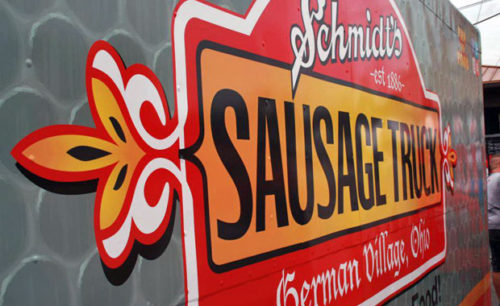
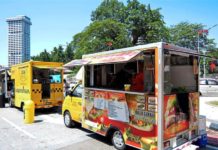
Worthington made its first foray into the trend of food trucks last summer, and as this summer approaches, city leaders and food-truck representatives are working together to more properly legislate the mobile vendors.
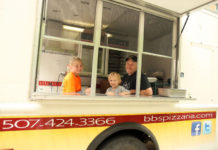
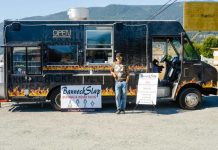
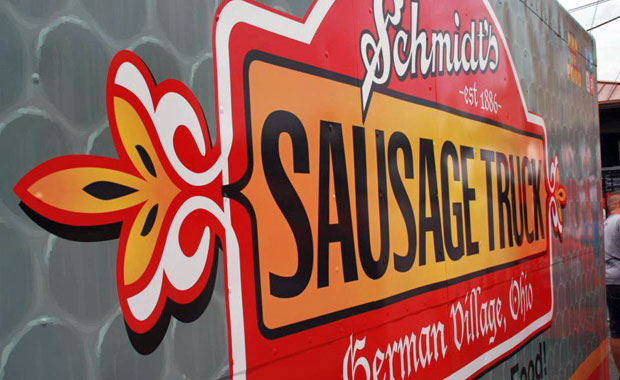
In 2014, Schmidt’s Sausage Truck became the first food truck to be allowed to operate in Worthington by obtaining a temporary 90-day permit, a process designed to give leaders and residents an opportunity to experiment with the concept.
During a meeting March 24, representatives from the Central Ohio Food Truck Association, the city of Worthington, the Olde Worthington Business Association and others from the community discussed whether food trucks should become a more common occurrence in Worthington.
“We’re kind of exploring the possibilities of Worthington and how to approach food-truck parking on private property, as well as private right of way,” association president Zach James said. “We’re kind of addressing it independently from the legislation that Columbus has issued in the last year. It’s definitely a different place in Old Worthington; it has different needs. There’s a different business climate, and we just want to find the best way to serve that.”
Last year, some brick-and-mortar restaurants were concerned that the food trucks would steal business. After the Schmidt’s truck brought people to downtown Worthington, however, many changed their tune.
At the beginning of the experiment, the Olde Worthington Business Association wrote a letter to express caution over the food trucks.
“The Olde Worthington Business Association recommends that a policy be established by the city of Worthington only in cooperation with organizations such as ours,” the letter read. “We welcome the opportunity to share our thoughts on food trucks within our community.”
For the most part, the association still has the same stance, OWBA president Jamie Moore said, but the organization will reassess after gathering more input.
“Our perspective will probably be to wait and see how residents and business owners feel before we decide what area we’re going to promote,” she said.
Ultimately, Moore said, the idea has plenty of support, and she hopes for a less complicated process for trucks in the future.
“For everyone’s sake, inventing another reason for permitting and adding more work to the city’s lap is not what anyone is interested in,” she said. “For the most part, if I had to make a consensus of the group and the people in the room, they felt food trucks should be welcome in an area of need or during events and (Worthington should) have some specificity for food trucks in the city.”
While food trucks work to change their perception, James said, he hopes communities like Worthington could see their benefits.
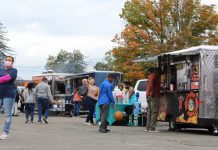
“There’s definitely a misunderstanding about the dynamic that food trucks bring to a business corridor,” he said. “Statistically, there have been surveys and polls that demonstrate that food trucks equal more foot traffic. And foot traffic is better for everybody.”
Moore said she hopes for a new policy on food trucks to be drafted by summer and expects something formal by the end of 2015.