
By Danielle Dreilinger | Boston Globe
 Cupcake stores are so passé. Today, a truly happening city needs a place where you can buy one from a truck.
Alas! Somerville, home of innovation, is way behind on the food truck trend.
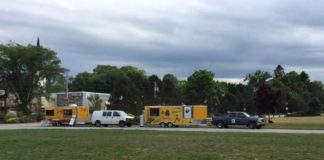
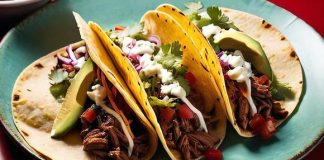
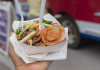
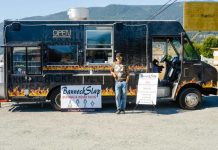
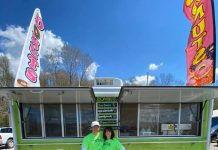
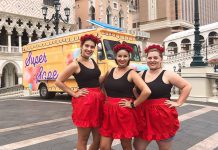
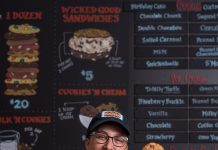
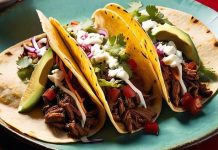
These are not construction-site canteens. The new food trucks draw all the cool, hungry kids to their yards. At hundreds of street corners in Los Angeles, New York, Austin and the Pacific Northwest, you can bop on up to, say, a retro refitted Airstream trailer and order yourself a pink-frosted cupcake, or a Korean taco that puts spicy scallion-laced beef in a conveniently portable package.
Now even our neighbor to the south has embraced the food truck with a vengeance. Boston’s new food truck initiative will “give opportunities to small businesses, enliven public spaces, and promote access to fun, interesting, fresh food across the city,” mayor Tom Menino said in an April statement. The Globe reported that Boston will add 12 to 20 new vendors by next spring, to add the area’s current compliment of food trucks.
Food trucks would seem an obvious fit for Somerville, fitting into both its hipster and immigrant traditions. But Somerville has only two licensed mobile food vendors: Bark N Bite and Moe’s BBQ Trolley (famous to amateur baseball fans and Tufts students), city spokeswoman Jackie Rossetti said in an e-mail. Somerville seemingly has no truck with food trucks.
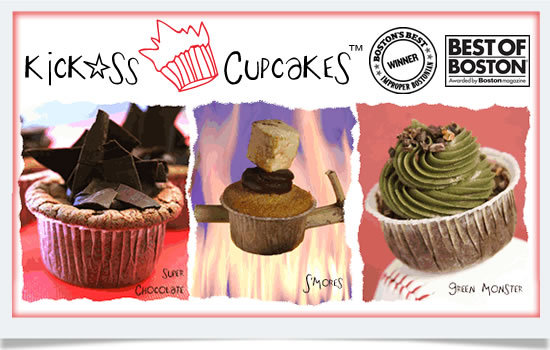
Davis Square’s Kickass Cupcakes is powering up a truck. Owner Sara Ross has applied for spots in Boston.
Where are my Korean tacos?
Boston, “I think, has been everyone’s focus… we’re just so excited,” said Ross, who’s secretary of the newly formed Boston Area Food Truck Association. In addition, though she’d like to have a truck at Tufts, her existing retail presence in Davis Square makes a Somerville truck a lower priority.
Todd Saunders, who co-owns Food Truck Nation with Ron Sarni, also had Somerville on the back burner. He’s “certainly” interested “because of its love of food, and I’ve heard great things from people about the mayor and his love of doing business in Somerville,” Saunders said. But “we’ve been focusing on Boston.”
Aaron Cohen, who’s starting a food truck as part of EatBoston, wanted to span Boston metro. In particular, “We’re excited to be in Somerville because we live there and it would be exciting to serve our community,” he said. He’d checked in with the city health inspector and planned to pick up an application.
For his grilled cheese truck’s next move Saunders liked the idea of Cambridge but said Cambridge had put a moratorium on new trucks. That could open opportunities for Somerville.
“I haven’t heard any negative things about the City of Somerville” not supporting food trucks, Ross said.
In fact, it just might be surprisingly simple. Vendors with state hawker/peddler permits just have to register with the City Clerk and pay an annual fee, Rossetti said. According to the application, it costs $150 per truck plus $50 per each employee named in the license.
The state permit costs $62 and requires food sellers to get “a Health Certificate obtained from the local Board of Health, where you intend to sell your goods,” according to the state division of standards.
Without a state permit, an applicant must get approval from Somerville’s weights and measures department, inspectional services/health division and fire prevention bureau. Then the board of aldermen makes the call.
Then there’s the other part of the equation: a place to park the truck. “It’s kind of like the cart before the horse before the chicken before the egg,” Cohen said. “We have to figure out where it’s allowed.”
This too might be less complicated than you’d expect.
Before Boston’s new ordinance, food trucks were expressly prohibited from operating at public parking meters. Somerville’s meters and non-permit spots, however, seem to be open. There’s no mention of commercial vehicles selling products in the July 2010 edition of the city’s traffic and parking regulations. Rossetti warned the aldermen might take action if public spaces suddenly teemed with trucks.
Two of the city’s most popular locations are off-limits.
Since Kickass is a little outside Davis, Ross liked the idea of having a truck right in the middle of the square. She thought the Davis and Union farmers market organizers would be into food trucks as well.
But without special permission, food trucks may not operate in Davis or Union squares; Powderhouse or Prospect Hill parks; or the area around the Somerville Hospital. The state has to okay any trucks on state property, which includes Dilboy Field, Foss Park, the Community Path and the Mystic River shoreline.
That was a downer to Cohen. If a truck couldn’t be in Union or Davis, he thought Somerville would look a lot less promising to most vendors.
Diana Kudajarova, co-owner of Journeyman, is serving gourmet barbecue at the Union Square farmers market–but she has a special event permit, not a hawker/peddler license, she said. The grill is “literally outside our door and we happen to be very close to the farmers market,” she said.
(The truly successful entrepreneur would set up on Highland Ave. in front of City Hall and the high school. Not a single place to grab a deli sandwich, let alone a Korean taco or cupcake.)
Carrie Dancy, executive director of East Somerville Main Streets, was concerned trucks would take money away from restaurants that make their permanent home in the neighborhood. However, she said, if it were “a complementary food not a competing food” it might draw new visitors.
As for East Somerville restaurateurs starting food trucks, “I don’t think it’s on the radar,” Dancy said, but “in order to be competitive people are working all sorts of new angles.”
Saunders said the City of Boston had set up the program to avoid encroaching on restaurants. In fact, he said, “basically all the restaurants we’ve talked to are interested in having their own trucks.”
As Ross waited to hear back from the City of Boston to see if she got slots at coveted locations near Copley, BU and the MFA, “I know it’s going to happen in Somerville,” she said. “It would be great if they would organize their own food truck festival.”
In keeping with major Joe Curtatone’s focus on health, if the city were to promote food trucks, “the big push would be for healthy options,” Rossetti said.
“A year ago when we started the process we were told we were crazy,” Saunders said. The food truck craze could take root, “very quickly in Somerville if there were a desire and a hunger for that.”
http://www.boston.com/yourtown/news/somerville/2011/06/somerville_scene_we_need_more.html