

 by Chris Wolf | Tyson Food Service
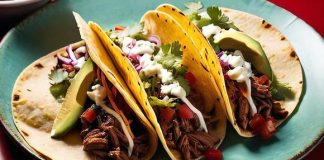
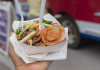
Drive-thrus and phone-delivery have been the standard for easy and instant food gratification for the past few decades. But remember those hot summer days in your childhood when the sound of a ringing bell in the neighborhood sent you running to the street with a quarter to buy an icy popsicle from the ice cream man as he passed by your house? Well, those days are coming back again. But now it’s your cell phone doing the ringing to tell you a mobile truck full of hot and fresh kogi short rib sliders and chicken mulitas is about to pull in front of your office building, and you’ll probably need a handful of quarters to get what you need this time.
The appeal of mobile food trucks has forever been limited to a small, devoted fan base of hungry office workers with iron stomachs and little imagination for food outside of standard fare such as cold sandwiches and hot dogs piled in steam table pans.

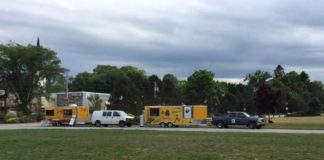
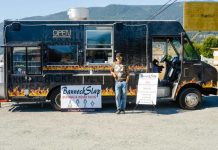
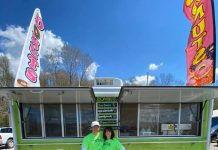
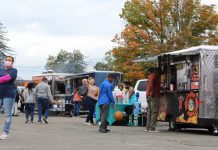
But in the past year or two there has been an explosion of moveable feasts on the West Coast, thanks to Roy Choi’s Kogi BBQ trucks that started rolling in 2008. Mary Sue Milliken and Susan Feniger’s Border Grill Truck that debuted earlier this year, along with dozens of other chefs with wheels. Now the whole restaurant industry has taken notice of these ultra-portable food powerhouses that have moved out of obscurity into notable novelty, fueling an explosion of street food migration onto mainstream restaurant menus, such as Taco Bell’s Cantina Tacos and California Pizza Kitchens Korean BBQ Tacos. The TV Food Network even has a new series called “The Great Food Truck Race,” hosted by Tyler Florence, which will likely fan the flames of this trend in itself, if only from a voyeuristic point of view.
Mobile food has been hovering on the obscure end of the trend radar for some time, moving a little up the scale when cart and truck operators started Tweeting their locations to devoted fans recently, and capital-strapped chefs started looking for affordable ways to connect consumers with their culinary creations.
But food carts moved higher on my “hot” list a few weeks ago when I discovered that Microsoft Corporation’s Bing ™ search engine had a mapping-related app called “findfoodcarts” that can track the EXACT and CURRENT location of dozens of mobile food carts throughout the city of Portland, Ore., essentially allowing people to intercept the food of their choice as it passed by – just like the ice cream man!
But now before you run out to the street to intercept a cart or truck that Bing™ says is passing by, you can see its menu, read user reviews and Twitter® feeds, and even learn what items are no longer available that day and how many people are currently hanging out at the cart.
The whole idea got me to thinking: How long will it be before mainstream restaurant chains realize what a threat (or opportunity) this whole mobile food cart tracking system is, and start doing something about it? I didn’t even have time to put this thought into a blog before I discovered that several restaurants we’ve all heard of are already answering the call: According to the L.A. Times, Johnny Rockets® already has a truck on the run in Washington, D.C., Fatburger® has ordered seven trucks to roam the streets, Subway® is set to launch trucks to serve footlong subs in Arizona, and Sizzler ® is planning to sell barbecued beef from mobile kitchens in southern California.
What this all points to, is a new definition of what is considered convenient while re-leveling the playing field for all restaurants. Sure, pizza delivery is convenient, but you have to plan ahead, order and wait. Drive thrus are convenient, if you’re driving a car through the right part of town. And mobile carts were only convenient if they happened to camp out in front of your office and you ran into it.
But now, with the convergence of various technologies connecting mobile phones to roving food vehicles, we can envision a day when consumers are less likely to get in a car to drive to a restaurant for a quick bite, and simply look to see what’s passing by their front doors when they’re hungry. Brick-and-mortar establishments that are located a few blocks away will be the fall-back choice second to fresher, more aggressive, ever-changing options that are just about to turn the corner and stop in front of one’s door.
Just as small companies (or even my children) can now reach you with their low-budget videos as easily as network broadcasters, thanks to the Web, now any mom-and-pop food truck can be just as convenient, accessible and top-of-mind as a large restaurant chain that has invested millions of dollars in brand advertising and prime real estate.
New food safety issues and labor challenges will present themselves along with the new, exciting promise of wired restaurants on wheels, to be sure. But now the old adage “location, location, location” takes on a whole new meaning for the future of convenience in foodservice.
Christopher Wolf is director of insights & innovation for Tyson Food Service.