








By Michael Fitzgerald | Record Columnist
Regulations sometimes make sense on paper, and may even have merit in practice, but they can still hurt ordinary people in ways rule-makers do not foresee.
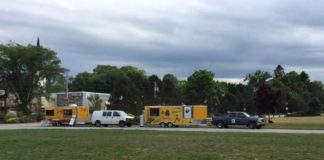
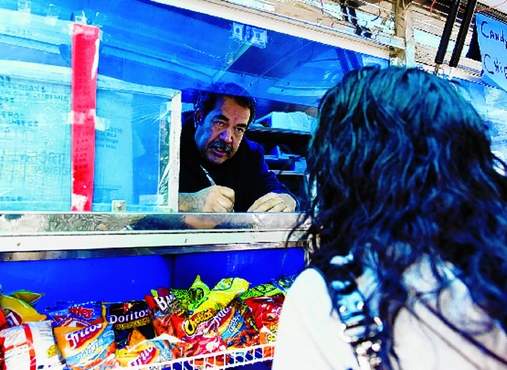
Take Jesse Trejo. Trejo, 59, owns a taco truck called La Golondrina (The Swallow). For a year he parked outside the DMV’s busy new headquarters on Lincoln Street.
“We weren’t making a bunch of money,” said Trejo, 59. But, “We were making a living, barely.”
He sells (reputedly delicious) bell pepper chicken in jalapeno sauce grilled by his cook, Esmerelda, and other foods to DMV customers and to folks from other nearby offices.
Or Trejo did, until Stockton code enforcers recently ousted him from his spot. Stockton’s municipal code says mobile food trucks cannot operate within 400 feet of residences.
Trejo is 369 feet away from apartments, the city says.
Legally speaking, code enforcers appear to have invoked the law properly. Still, the ouster put a hurt on Trejo, who took out a second mortgage on his house to buy La Golondrina.
“I don’t think a person should be pushed around like that,” Trejo said.
He’s got a point. Trejo’s Mexican parents brought him to California when he was 6. “I’ve worked all my life. I’ve worked since I was 9 years old out in the farms.”
Becoming a citizen, Trejo enlisted in 1970. He did two tours in Vietnam. Coming home, he worked 30 years as a cement mason.

- Jesse Trejo’s truck La Golondrina on Weber Avenue on Thursday afternoon.

He works to supplement his pension to help support his wife, and a struggling stepdaughter who is widowed and has two children of her own.
Consider Trejo’s hours.
Rising at 3 a.m., he gets La Golondrina from an Airport Way lot (the name comes from his mother, who forbade him from hunting swallows as a boy. She believed they migrated from Rome and shared its Catholic grace).
Buying provisions from a supermarket, Trejo picks up Esmerelda in French Camp at 8 a.m., drives to his spot and prepares food. He opens around 10 a.m.
Trejo doesn’t get home until 9:30 p.m.
Things went well for Trejo outside the DMV for a year. Then the city’s code enforcement section received a complaint about him being illegally close to residences.
He was. By 31 whole feet.
Mobile food trucks can be nuisances, explained Peter Lemos, the city’s code enforcement field manager. “They generate smell and waste and they have people hanging out and eating. Residential areas generally don’t like that.”
After determining Trejo was closer than 400 feet – though not by much – Trejo was warned several times he could stay only one hour before leaving. Ultimately the city slapped him with a $305 citation.
“We have to enforce our code against everybody equally,” said Lemos.
Actually, the city doesn’t enforce the law equally. Any number of food wagons park within 400 feet of residences in Stockton. The city doesn’t go after them. Not unless someone complains.
Such “complaint-driven” enforcement is standard in cities. It rankles Trejo, though.
“I don’t think it’s fair that other people have been working other areas around Stockton 10 to 12 years and they don’t ever come out and say anything to them and I get pushed out,” he said.
The rules prohibit disclosing who complained. A visit to the site, suggests the complainant almost certainly was not a resident. The truck could not conceivably be a nuisance to the backside of apartments 369 feet distant behind the DMV.
In fact, residents are not the primary complainants under the law, Lemos said. Rival restaurants complain; other businesses complain; the DMV complained at its previous location.
But most complaints by far come from other mobile food vendors.
Approximately 120 to 130 taco trucks vie for business in Stockton, Lemos said. Too many. When one runs afoul of the law, he often reports others.
Also, most taco truck drivers belong to a union. Trejo does not. Union drivers sometimes rat out nonunion drivers to hassle them.
This is all very interesting, but abetting taco truck intrigue is not the intent of the law.
“Using the city as a pawn for this type of complaining was not the intent, and the city should not be put in that position,” said Deputy City Attorney Deanna Solina. “That’s something we should go back as the department and talk about.”
Meanwhile, a degree of unintended consequence is endangering the livelihood of a hard-working taxpayer who served his country honorably.
“I have to start all over from the bottom,” Trejo said. “It takes time to build up clientele. It’s hard. I had to spend what little money I had.”