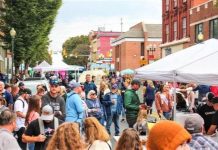
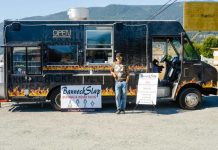



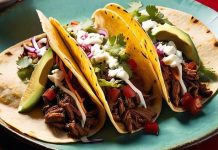


The next new hot place to eat in College Station may be outside a truck.
City employees said Wednesday that they are considering revising regulations to allow food carts and trucks to operate on a year-round basis. The current law prohibits mobile food vendors from selling more than 21 days a year or three days in a row.
A change was first proposed by Councilman Jess Fields, who said he was inspired by the growing food truck business he found while visiting Austin.
“You go on South Lamar and you have these lots where they have food vendors out,” Fields said. “It is kind of a neat concept. It is good for pedestrians and the people that own the businesses.”
Staff Planner Lauren Hovde said many large cities have changed their laws to accommodate the trucks. They have become a sensation in Austin, where blogs and websites emerged to track the trend. The city hosted about 30 trucks at the first annual Gypsy Picnic Trailer Food Festival in November.
“They have become kind of trendy and posh,” Hovde said.
College Station has received about 10 requests for permits to open a mobile food business in the past year. Hovde said the city has mostly been forced to turn them down.
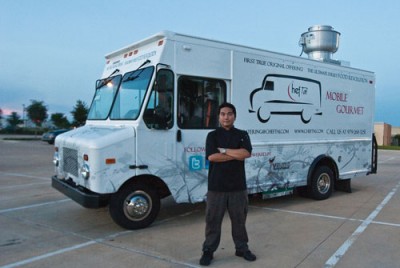
Chef Tai’s is currently the only one allowed to operate in the city. It is run by the head chef of Veritas Wine and Bistro on University Drive and parks at a different parking lot each weekday for lunch and dinner. A Twitter feed updates customers on where it will be located.
Hovde said Chef Tai’s renews its permit frequently to stay open. That wouldn’t normally be allowed, but city staff is tolerating it because the law will likely change soon, Hovde said.
“That is our interim way to address the situation,” she said.
A proposed law change is expected to go before the council later this month.
City officials said some concern has been raised by established restaurants — especially on Northgate — that the mobile vendors could be harmful for business. Hovde said city staff expects to recommend requiring the trucks to park at least 300 feet from permanent restaurants and 100 feet from Northgate restaurants.
She said staff will also ask that the permits be limited to businesses that currently operate “brick and mortar” restaurants. That provision could change, she said, because the city’s legal department has raised concern that it could be unconstitutional.
Fields said he would work to remove that provision.
“Some restaurants might be concerned with the idea that these people will come in and take market share away, but not necessarily,” he said. “There is nothing to stop them from building their own food cart.”
Opening up the mobile food permits to everyone would encourage small business growth, Fields said. Someone who wants to sell hot dogs or funnel cakes could buy a used vehicle, have it retrofitted, obtain the permits and begin selling, he said. That is a much more obtainable goal than raising the capital to open a full restaurant, he said.
“When we anchor it to existing restaurants, that is anti-competitive,” Fields said.
Mark Rowe agrees. He and his wife bought a 28-foot trailer in 2009 to open a Chicago-style hot dog stand. They paid to install kitchen supplies and painted it blue, but were then told that they couldn’t sell more than seven weekends a year.
“We were planning on putting it in College Station right near the university,” he said.
The city of Bryan also denied them a permit, he said. Kevin Russell, director of development services in Bryan, said his city has the same law as in College Station. No changes are in the works in Bryan.
Rowe decided to open Leann’s Winery just outside the city limits in Wellborn. He said he built a base of loyal customers, but his business was harmed by being so far south of most offices and the Texas A&M campus.
“We have taken our demographics and moved it to a very far away place — far enough away that it wouldn’t make enough money in Wellborn to survive,” he said, explaining that he met his expenses but wasn’t earning enough money to live on.
The business closed in July, and he sold the truck to someone who wanted to open a fish taco stand in Charleston, S.C. He said he’s sure he could have stayed open if he’d been allowed to operate in College Station.
“Those laws should be changed,” he said. “How is a new person going to start a business on a small budget? The little guy can’t do it.”