
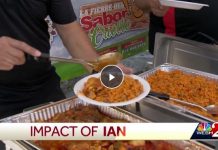
Video | Owners of Frysmith speak about getting laid off, creating plans for a new business and overcoming challenges.
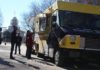
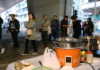
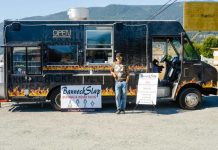
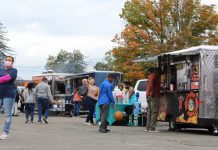
The food truck Frysmith is parked on the corner of Abbot Kinney Boulevard and California Avenue, with a line as long as one you would see at Disneyland. The truck used to be a Frito-Lay truck, one that someone eventually used as storage.

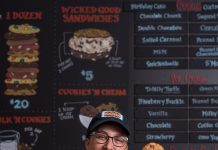
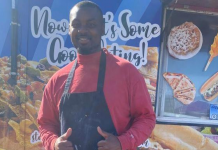
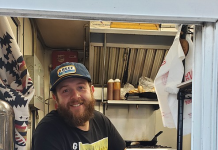
Brook Howell, co-owner of Frysmith, stands behind the register. She happily greets the next guest in line, most likely another drunk who will tip the food truck $60. She turns around, repeats the previous order to Erik Cho, her husband and co-owner of Frysmith, and diligently goes back to work at the register.
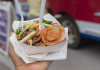
“If you have any questions about anything on the menu, let me know!” she says with a smile on her face and an order of chili cheese fries in her hand.
People pick up their orders, then line the wall behind the truck. Some are regulars, some are newcomers.
But for everyone, the selection on the menu is different than the usual burger and fries. Though the young couple enjoys the burger stand culture, they decided to experiment with something a little more unique.

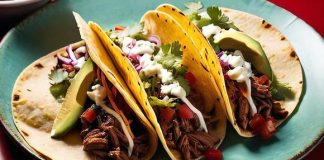
They use beer and chocolate to create their all-beef chili. For a vegan equivalent, they top fries with organic tomatoes, mixed beans, soy chorizo and smoked paprika. And for those who love kimchi, they couple the pickled Korean vegetables with pork belly. Handfuls of onions and cheddar cheese are added as well.
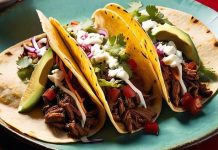
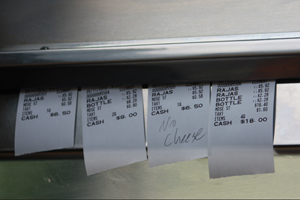
Free-range chicken, a tomatillo-tamarind sauce and cashews are thrown on top of sweet potato fries. For steak lovers, there is the Rajas, the Frysmith’s most popular order. Shawarma-marinated steak is topped with fire-roasted poblano chiles, caramelized onions and Jack cheese.

“It just seemed like there were so many things you could do with fries that people aren’t really familiar with,” Howell says. “We still get people going, ‘Oh, fries? Like as a meal? That’s it?’ But really, when you eat fries covered with meat and cheese, that’s it, that’s all you need.”
Moments later, as Howell cleans the fry oil off the windshield, she spends a few minutes talking about how she and Cho got laid off from their jobs; he as a worker in the film industry, she as an editor at a car magazine. But their positive attitudes make it difficult to believe they once worried about what to do next.
“We knew we had to do something,” Cho says. “When we decided to start a food truck, from there, we were just thinking about what would work best on a truck.”
Howell also spends some time talking about the custom-built food truck with an 18-foot kitchen, something that seems to be her pride and joy.
“We shopped around a lot when we wanted to start the truck,” Howell says. “We considered renting a truck, but we couldn’t do that [because] we needed extra fryers.”
She later adds she and Cho opted to purchase a diesel truck, so they could convert the engine to run off vegetable oil.
“We cut the fries fresh every day, and we change the oil every day,” Howell says. “All that excess oil, we just drain it, filter it and put it back.”
But despite late nights on the food truck, which, Cho says, is actually “really early most of the time,” Cho and Howell work hard. So hard, in fact, they might want to open a restaurant one day.