





By Diego M. Ortiz | Peru This Week
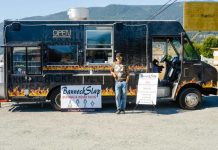
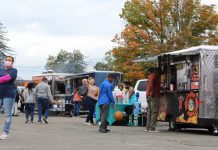
The food truck is a part of Americana that, due to the recession in the US, has been making a comeback. Fueled by high-end chefs being laid off and looking for an alternative to unemployment, the food truck is on the rebound.
Here in Lima, the food truck has, until recently, been a foreign concept. Of course, for Peruvians the corner anticucho or hamburger stand is a common site, and a right of passage for tourists. But the high-end mobile café or restaurant-on-wheels is slowly catching on, thanks in huge part to young entrepreneurs.
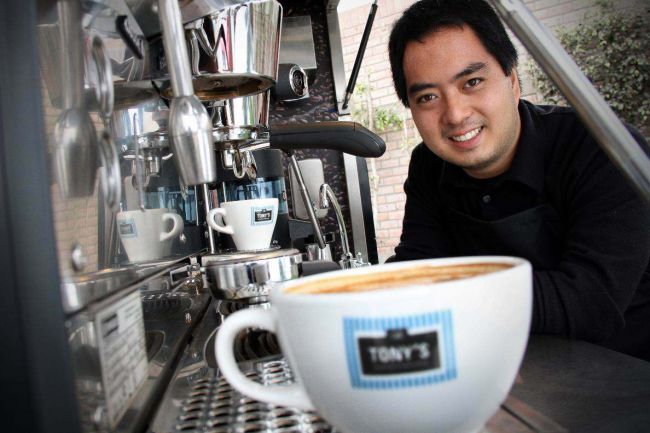
Antonio Tang, 20, is determined to establish the mobile food industry in Lima. He, and his two cousins Santiago and Mariá del Rocio, own Tony’s Café, a mobile style European coffee shop that has been making a name for itself around the capital.
Inspired by an old Italian espresso machine their grandfather used to have when they were growing up, the young Tangs would play at preparing coffee for their friends and family. They continued playing with the machine, along the way perfecting their technique, until last year when they decided to turn their hobby into a business.
The result is a coffee bar that sells gourmet Peruvian coffee and baked goods. But it hasn’t been easy.
“We were skeptical about this idea working in Peru because there isn’t a big coffee culture here,” Tang said. “But we wondered, what if instead of a set location, which can be a risky investment, we moved around?”
The Tangs decided that if they offered a quality product and took it directly to the customers, there was a chance this new venture could be a hit.
Tang presented the idea to his parents, who to his surprise loved the concept and encouraged him to apply for a loan of 15 thousand dollars to realize his vision.
He received the loan and used the money to buy a moto-taxi that he refurbished and converted into the first mobile cafeteria in the country.
But before they could take their coffee to the people, there were obstacles to overcome.
“At first it was very difficult to get permits,” Tang said, “there wasn’t anything like us before, so we had to convince the municipalities around Lima that we were different than other vendors.”
Last year, Tang convinced the mayor of Pachacamac to grant them the permit.
“Pachacamac giving us a permit was a miracle,” he said. “We had to convince them that we are clean, professional, and dedicated to freshness and quality.”
After Pachacamac recognized them, he says it was easier to get permits in other areas such as Punta Hermosa and Santa Maria del Mar districts. Yet, he admits that it will be more difficult to break into Miraflores and San Isidro, but that those two locations could potentially be the most lucrative.
Now, Tony and his cousins have six mobile units, with the goal of another six by the end of 2013.

Other mobile food entrepreneurs are beginning to follow Tony’s lead, but they have faced a bureaucracy that doesn’t quite know what to do with their industry.
“There is no precedent for regulating businesses like ours,” Rodolfo Montañez, 20, a gastronomy major and one of the founder of La Mecha Combi, a gourmet food truck that he and three university friends are developing.
“The municipalities are concerned with how we could be regulated, the amount of trash we produce, and security.”
Montañez wants to remain “above board” and receive all the required licenses before really launching La Mecha.
He wants to build on the momentum that began last November when Montañez, along with Alexis Dominguez, 19, Renato Reátegui,19, and Vikrah Tulsiani,19, received a grant of S/. 20,000 from the Romero Foundation for the business plan they wrote while studying at Universidad San Ignacio de Loyola.
“This business is different,” said Dominguez, who studies International Business at San Ignacio. “We have a new product, so what we are trying to do is change people’s perspective about where you can buy a healthy, quality meal.”
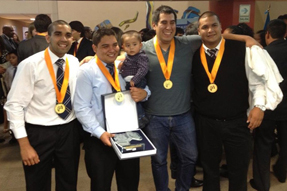
Currently, the group of friends is working on a market study with Carlos Lizarzaburu, a professor at San Ignacio, to determine what would be the most viable locations for them to target while applying for permits.
For now, they are building their reputation by catering events around the San Ignacio University campus.
They hope that their growing client base and the university’s support will open doors for them in the near future.
“We aren’t going to give up on this project,” Montañez says. “We want to offer people quality service, and good food. That’s the plan.”
The group hopes to start a fleet of food truck and eventually open a restaurant in Lima.
http://www.peruthisweek.com/food-276-young-entrepreneurs-bring-gourmet-food-trucks-to-lima/