
By Will Doran | News Observer
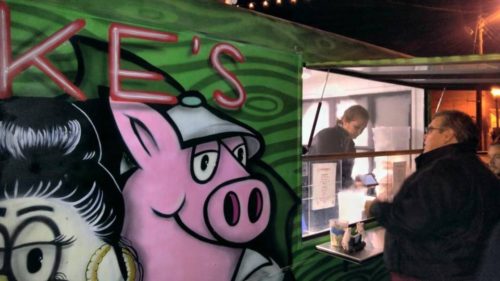
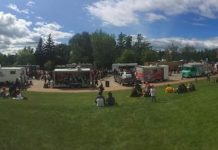
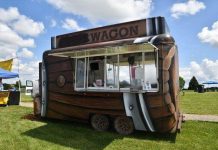
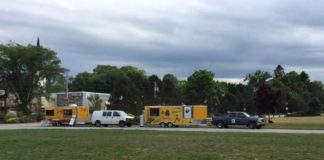
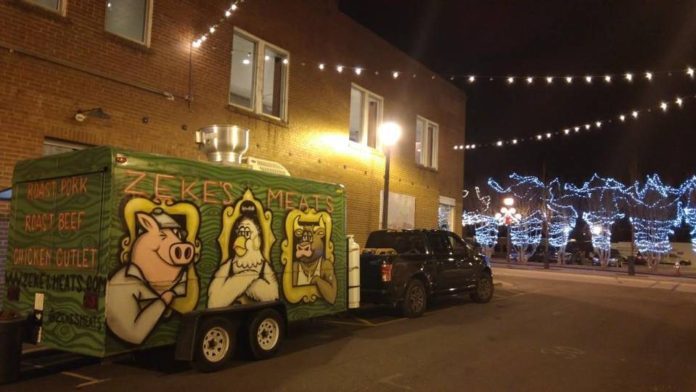
Food truck supporters won a temporary victory Tuesday after the planning board said a proposal to ban food trucks downtown was too restrictive.
Days earlier, the town’s staff had unveiled rules that would have prevented food trucks from setting up almost everywhere in both downtown districts. But after hearing opposition in person and online – a petition reached 700 signatures in two days – the planning board sent proposed changes back to the staff.
Fuquay-Varina started allowing food trucks about six months ago, but some have expressed concerns about the competition the mobile trucks bring to restaurants with a permanent address. Those complaints resulted in the suggested ban.
Any new rules should protect restaurants without banning food trucks, said Ed Ridpath, the former town commissioner who is now chairman of the planning board. The staff will bring changes back to the planning board Feb. 15, and then to the town commissioners for a final vote.
The initial proposal would have banned food trucks from three of the four locations that regularly host food trucks, including The Mill, whose owners orchestrated much of the opposition against the potential ban.
More than 50 people attended Tuesday’s planning board meeting, almost all of them for the food truck issue. One person spoke in favor of the proposal and 16 spoke against it.
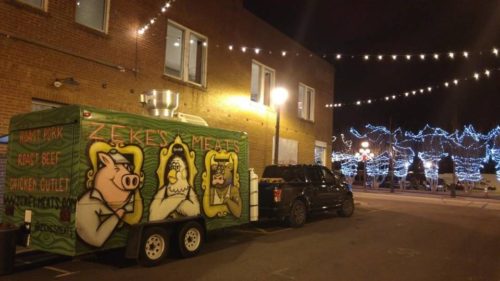
In addition to The Mill, downtown’s Draft Line Brewing and Fainting Goat Brewing often invite food trucks. Outside downtown, Jonathan Holland, a local State Farm agent, hosted food trucks in his parking lot this summer.
Fainting Goat, The Mill and Holland’s office are all in commercial areas, while Draft Line is in an industrial zone. The proposal would have prohibited food trucks from all commercial areas. It would have allowed food trucks at construction sites, open houses and in industrial areas.
There is very little industrial land in or near either downtown district. Other than Draft Line, there are a handful of old warehouses, the Walmart shopping center and a strip of Broad Street across from Fuquay-Varina High School.
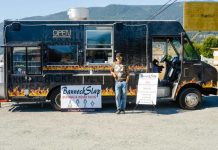
“The restrictions … would essentially run me out of Fuquay,” said Tony Hudson, who owns the Flattz food truck that has become popular around town.
Now, food trucks can be in any nonresidential part of town as long as they’re 100 feet away from any restaurant or have permission to be closer.
Katie Dies, one of the co-owners of The Mill and nearby Stick Boy Bread, said she agrees the current rules are too lenient.
“We realize there needs to be some room for regulation,” she said. “But the proposed changes in front of you are totally inappropriate.”
Economic boost
When Ridpath was a commissioner, he voted to allow food trucks. But Tuesday he said he also understands arguments to restrict them.
“It’s clear that somebody who has a brick-and-mortar restaurant has made a greater investment in our town than someone who drives a food truck in,” he said.
But food truck advocates said there’s a flip side to that argument. They said discouraging food trucks could hurt bars and retail businesses, in addition to turning down a tourism opportunity and possibly preempting future restaurant growth.
Steve Ashworth, the third-generation owner of Ashworth’s Clothing, said food trucks have helped his business by bringing more people to downtown. He also said food trucks enhance the local restaurant scene, rather than threaten it.
That was an opinion echoed by many Tuesday, including Ryan Conklin, who recently wonthe Got to Be N.C. Competition Dining series, a statewide cooking contest.
“I live in Fuquay-Varina,” said Conklin, the executive chef at Rex Healthcare in Raleigh. “I’ve got a family, and when we go out to eat we don’t stay here. I think we need a bit of hip, wow and now.”
Art Sheppard, CEO of the RDU Mobile Food Association, also runs the popular Wandering Sheppard blog about area food trucks. He said many small towns have embraced them. Both Garner and Cary, for example, have used food truck rodeos to increase awareness of their downtowns and draw more outside visitors.
Sheppard listed half a dozen brick-and-mortar restaurants in Durham that started as food trucks and said it’s a trend that’s spreading into Wake County, too.
“By putting up a regulation that’s a little too restrictive, what you might be doing is closing the door to investors or small business owners,” he said.
Restaurant reaction
The restaurants near The Mill have had mixed reactions. Yury Rojas, owner of Anna’s Pizza, couldn’t be reached for comment but a manager confirmed they have complained to the town about the trucks.
But Edna Morales, founder of The Meeting Corner, said she has no problem with food trucks. She also said The Mill gives her menu to customers, along with the menu from Anna’s, so they can choose to order takeout instead of going to the food truck.
On Tuesday, Charles Barnes was the lone speaker in favor of the proposed ban. He’s a partner in South Main Market, a downtown real estate company. It owns the building between Fainting Goat and The Mill, where Beef O’Brady’s was until it recently closed.
Like those who were against the proposal, he acknowledged room for compromise and asked the town to include his business in future discussions.
“We’re not opposed to food trucks,” Barnes said. “We think food trucks should be regulated.”
http://www.newsobserver.com/news/local/community/southwest-wake-news/article54698680.html