
By Melissa Mangelsen | Niagara Advance
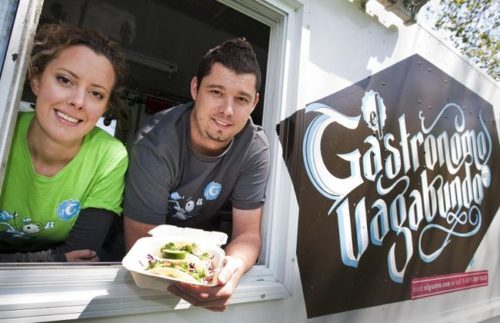
Currently, food trucks are not allowed on public roads or parks or in the Queen Picton Heritage District, and no changes to that are being contemplated. However, the Town is unable to control food trucks that are on federal jurisdiction, such as property owned by Parks Canada.
Some of the core issues shared were the idea that food trucks are competing unfairly, they do not go through the site plan approval process and parking requirements NOTL restaurants and coffee shops must meet, food trucks do not pay large sums of money for their bricks and mortar, do not maintain services to residents throughout the quieter winter months, they do not employ local people on a year-round basis and do not pay taxes to the town.
Food truck owners and supporters had different opinions.
“If a place is allowed to serve food, how is a mobile restaurant, caterer service or a food truck any different?” said one food truck supporter.
Although lack of health inspections are a general concern, one food truck owner said that food trucks are inspected more in one year than a typical restaurant in five years.
In most regions that have accepted the food truck phenomena they are considered food premises, just like restaurants, and are subject to inspections.
Public Health uses three different categories for food vehicles and most ‘gourmet’ food trucks would be considered mobile preparation premises. Depending on what kind of food is being prepared and with what equipment, there are different standards of inspection. Most regions require a certified food handler supervising the food truck and anyone handling food needs to be certified.
One food truck owner, who claims he’s worked for half of the restaurants in NOTL, said that he’s seen unsanitary conditions in restaurants, and it’s unfair to classify food trucks as “dirty” or “not hygienic”.
Food truck owners also argued that they do pay taxes, their annual business license, and they also pay $500 every time they hire a new employee, even if that employee is only there for a couple of weeks.
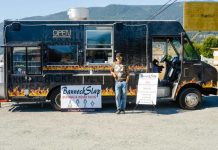
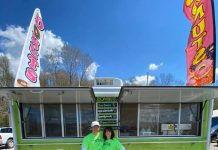
“Food trucks make a small amount of profit off of their foods. We’re not making a fortune doing this,” said a food truck owner.
Though most restaurant owners are against seeing food trucks in NOTL, one restaurant owner in Virgil sees things differently.
“Food trucks haven’t had any effect to my business. They draw a different crowd into NOTL. I’m happy to share the space with them. I feel like we can work together with food truck operators, instead of against them,” she said.
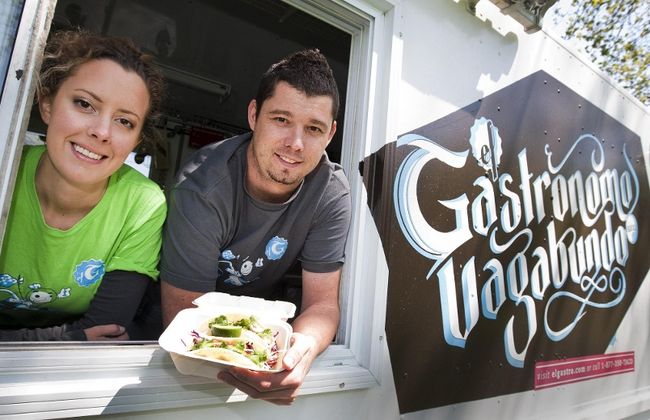
Food truck owners say they’re not coming to NOTL to steal business from anyone, they’re paying to be here and they’re helping to draw a new crowd in as well as participating in the events they were asked to do.
A local resident spoke in favour of the food truck option.
“It provides a different cultural social experience. There is a time and place for food trucks, but my friends and I love going out, grabbing something quick and setting up a picnic,” she said.
Food trucks have gained success because of their seasonable produce, rotating menu and lower prices. They also use social media as a strong tool for marketing.
There’s no doubt that there is a desire for food trucks, but the question remained, would they benefit the town or not? NOTL is struggling with the challenge of attracting new tourists or young tourists, while keeping the historic and quaint feel to the town.
“If we stay the same in NOTL, we’re in trouble. We need to find ways to move forward,” said one resident.
Because there are no infrastructure costs, Janice Thomson of the Chamber of Commerce, in a written submission, said it seems food trucks are benefitting from the premium market created by the NOTL business community and food trucks in NOTL can charge more for their products than in other communities.
Some restaurant owners believe that by situating themselves at wineries, the food trucks are benefiting from the wine and culinary market created by existing restaurant operators who have partnered with local wineries for over two decades to help build a market for VQA wines.
Because of their growing popularity mostly at private and special events, town staff has begun to obtain information from across the U.S. and Canada, as well as hearing from residents and stakeholders, before presenting a report to council.
The issue regarding food trucks in Niagara-on-the-Lake doesn’t seem to be any closer to finding common ground after a public information meeting held Monday.
The meeting invited people from the community to have their say, and share their suggestions, whether it be for or against food trucks, if they should be permitted and where.
There was some confusion about the Town’s intent, which was to seek input on how to best deal with food trucks, including zoning issues.
Leah Wallace, senior planner with the Town, led the meeting and informed people that a report will go to councillors in mid to late June.
The Town has already met with stakeholders, including restaurant owners and Chamber of Commerce representatives, regarding food trucks.
http://www.niagaraadvance.ca/2013/05/01/notl-to-decide-how-to-deal-with-food-trucks