
By Candelora Versace | The New Mexican
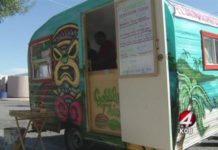
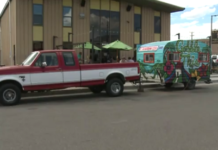
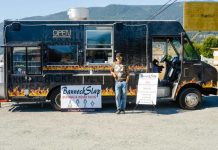
 In the two years since Slurp — Santa Fe’s first Airstream food truck — opened on a quiet South Capitol side street, its owners have seen little progress in a number of ongoing challenges, including citywide acceptance. Still, owners Rebecca Chastenet and Carlos Briceno sought to reach out to the larger food-truck community.
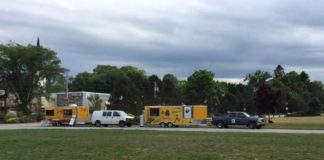
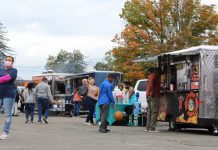
“We thought we could band together, the more the merrier,” Chastenet said about the Food Truck Caravan, which launched earlier this summer. Based on concepts seen throughout the country — from Tulsa, Okla., to Columbus, Ohio, and Austin, Texas — the caravan is a collection of food trucks, parked together as part of a larger community event, each offering a different cuisine.
By working with city officials, the Santa Fe Railyard Community Corporation and SITE Santa Fe, Chastenet and Briceno created the Food Truck Caravan. Sponsored by Los Alamos National Bank, the “pod” of food trucks banded together every other Friday night throughout the summer, coinciding with the Railyard Park Summer Movie Series.
The Food Caravan’s final appearance as a collective was held from 6 to 8 p.m. Friday, Aug. 24, at the SITE Santa Fe parking lot. Throughout the summer, many food trucks have joined Slurp and its portable mini-Airstream, the Slurpmarine, for the caravan, including Steve Montano of All Fired Up (turkey legs and lamb tacos); Dr. Field Goods (raw foods); Nile Cafe (now open in a brick-and-mortar space on Old Santa Fe Trail); and the popular Plaza truck, Roque’s Carnitas.
While food truck “pods” are popping up in both large and small urban centers around the country, Chastenet and Briceno have found downtown Santa Fe to be a bit behind the curve. They are, however, optimistic that they have laid the groundwork for future caravans, but they also acknowledged that several factors need to be addressed in order for local food trucks to flourish in Santa Fe.
“There just may not be enough people here,” Briceno suggested. “We just got back from Tulsa and there was a whole thing happening there, right downtown, food trucks, music, the park filled with people. Santa Fe doesn’t really have a street food culture — people eating in the park, that kind of thing.” Instead, he spots families toting McDonald’s carryout bags to parks and other outdoor venues.
For Chastenet, the problem is rooted in a city regulation that requires food trucks to remain stationary.
“First and foremost, in Santa Fe, each food truck or trailer has to be parked in a specific spot,” she said. “City regulations require the trucks to be stationary, so Santa Fe is not a city of mobile food trucks yet, but we hope that changes.”
She also pointed to the layers of bureaucracy that the Food Caravan had to work its way through, from temporary parking permits to zoning to electrical power issues, which all presented administrative issues that the vendors weren’t prepared for.
“The Railyard even updated their electric power system in hopes of creating a bigger [food-truck] scene,” Chastenet said, but she added that most of the vendors are extremely small businesses. Coordination, organizational efforts and city fees, on top of daily business demands in a tight economy, were all greater challenges than they expected.
Chastenet and Briceno said social media — the use of Twitter, Facebook and other network sites — is often the marketing tool of choice for mobile food trucks, but, they said, the mobile-vs.-stationary truck issue is a huge stumbling block for the potential growth of a food-truck culture in Santa Fe.
“In other places, the trucks can move around and social networking helps because it’s used to tell customers where the trucks will be,” Chastenet said. While she frequently updates Slurp’s blog and Facebook page with menu items and stories of food-truck culture, the stationary nature of her Airstream means she’s competing with traditional restaurants instead of taking advantage of an on-the-go population.
“We were surprised to find that our steadiest customer base is retirees,” she said, instead of the young hipsters that usually flock to food trucks in larger cities. This so-called graying of Santa Fe is a refrain that has been on the city’s radar recently, as tourism officials are now actively seeking new ways to lure younger tourists.
“A lot of events, like the Folk Art Market, are starting to invite the food trucks, there are things in the works for the future, but we think from an urban planning point of view, there are lots of great examples in other cities of how food trucks can be incorporated into a vibrant city scene.”